Jun. 23, 2026
In modern healthcare facilities, selecting the right hospital bed system is a critical decision that directly impacts patient comfort, caregiver efficiency, and long-term hospital operational costs. Among the most commonly compared options are Full Electric Hospital Beds, Semi-Electric Hospital Beds, and Manual Hospital Beds.
For procurement managers, hospital engineers, and medical distributors, understanding the differences between these three categories is essential for making a cost-effective and clinically appropriate choice.
A Full Electric Hospital Bed allows complete electronic control of bed functions using a hand remote or integrated control panel.
Typical functions include:
Height adjustment
Backrest elevation
Leg section adjustment
Trendelenburg and reverse Trendelenburg positions
These beds are widely used in ICUs, high-dependency units, and premium care wards.
Maximum patient comfort
Reduced caregiver workload
Precise positioning control
Suitable for long-term care patients
Higher efficiency in clinical operations
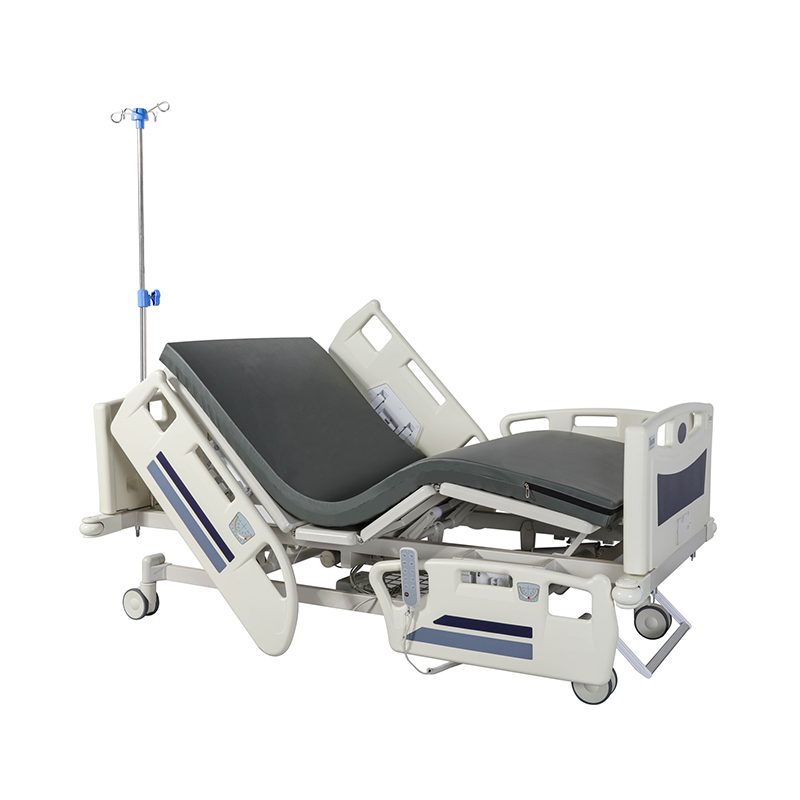
Five Function Electric Hospital Patient Bed
A Semi-Electric Hospital Bed combines electric and manual functions.
Typically:
Electric control for backrest and leg adjustment
Manual crank for height adjustment
Balanced cost and functionality
Lower price than full electric beds
Easier maintenance
Suitable for general wards and rehabilitation centers
A Manual Hospital Bed relies entirely on mechanical crank systems for adjustment.
No electric components
Fully mechanical operation
Basic positioning functions
Lowest cost option
Simple structure
Easy to maintain
Suitable for low-budget healthcare environments
Full Electric Hospital Beds offer the highest functionality and caregiver efficiency
Semi-Electric Hospital Beds balance cost and performance
Manual Hospital Beds are most cost-effective but require more physical effort
A common procurement question is:
Which hospital bed type is best for different medical environments?
Best choice: Full Electric Hospital Bed
High precision adjustment
Frequent patient repositioning required
Reduced nurse workload
Best choice: Semi-Electric Hospital Bed
Balanced budget and functionality
Moderate adjustment needs
Suitable for medium-term care
Best choice: Manual Hospital Bed
Basic functionality sufficient
Cost-sensitive environments
Minimal adjustment frequency
When evaluating hospital beds, procurement teams should focus on:
For electric models:
Motor durability
Noise level
Load capacity
Important safety requirements include:
Side rail protection
Emergency lowering system
Locking wheels
Anti-slip mattress support
Common materials include:
Cold-rolled steel
Powder-coated steel
Aluminum alloy components
Typical hospital beds support:
Standard: 180–250 kg
Heavy-duty models: 250–400 kg
YIDE provides a full range of hospital bed solutions designed for hospitals, rehabilitation centers, and home care environments.
YIDE hospital beds are designed with:
Stable motor systems for electric models
Reinforced steel frame structures
Ergonomic patient positioning design
Easy cleaning and maintenance surfaces
Multiple configuration options
These features ensure reliable long-term performance in different clinical environments.
Full electric beds control all functions electronically, while semi-electric beds use electric control for positioning but manual adjustment for height.
Full Electric Hospital Beds are best for ICU environments because they allow precise and frequent adjustments.
Yes, manual hospital beds are still used in low-budget healthcare facilities and home care settings.
With proper maintenance, electric hospital beds can typically last 5–10 years depending on usage intensity.
Yes, YIDE provides customization options for size, functions, materials, and accessories.
YIDE is committed to providing reliable, safe, and cost-effective hospital bed solutions for global healthcare institutions. For product specifications, procurement support, or quotation requests for hospital beds, please contact us:
Email: info@sjzyidemedical.com
Related News
How to Choose a Walker for Stroke or Hip Replacement Recovery
How to Adjust a Walker to the Correct Height for Safe Daily Use
Two-Wheel vs Four-Wheel Walker: Which Is Safer for Older Adults?
Upright Walker vs Traditional Walker: Posture and Mobility Benefits Compared
Standard Walker vs Rollator: Which Offers Better Stability for Seniors?
How to Clean a Nebulizer Properly to Prevent Bacterial Contamination
Contact Us

Top-Tier Medical Device Suppliers At Your Service.
If you need customized products for your own brand or procurement project materials, please leave a message here. We will send you a quote immediately and arrange delivery promptly.